

World’s most precise measurement tool made small.
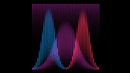
They’re light sources made up of thousands of equally spaced optical frequencies, each akin to an ultra-stable laser in its own right. Frequencies can be converted backwards and forwards, depending on whether microwave, radio or light-based frequencies are desired.
Researchers have been trying to get miniature frequency-comb generators onto chip-scale platforms so they can be mass produced for about twenty years now. But despite significant progress, existing architectures have proven a barrier.
Now Dodd-Walls researchers, in collaboration with researchers in the United States, have found a new way to generate chip-scale frequency combs that overcomes the barriers associated with existing architectures.
Dodd-Walls Principal Investigator, Professor Miro Erkintalo says the breakthrough is a culmination of several years of work that applies out-of-the-box thinking to the comb generation process.
“Instead of generating new frequencies by cascading away from a single input laser as is common in existing architectures, we use two lasers with vastly different frequencies and generate a comb in between them. By configuring the two input lasers just right, and leveraging clever physics, we are able to turn the chip-scale comb into a precision measurement tool that bridges radio/microwave frequencies and optical frequencies.”
To demonstrate the system’s performance and versatility, the researchers used it to perform three core tasks associated with optical frequency combs: generating precise optical frequencies, acting like a gearbox for optical clocks, and producing low-noise radio waves. Applications for such tasks include precision radar, high-capacity communications, sensing, and navigation.
This work was led by Erkintalo at the University of Auckland and Grégory Moille and Kartik Srinivasanat the University of Maryland and America’s National Institute of Standards and Technology. They have submitted a provisional patent application based on aspects of the work. The paper is available here.
Latest
News


The Dodd-Walls Centre research focus is photonics, the generation, transmission, and manipulation of light, and the study of matter and energy at the quantum level.