

Magnetic field sensing with individual dysprosium atoms
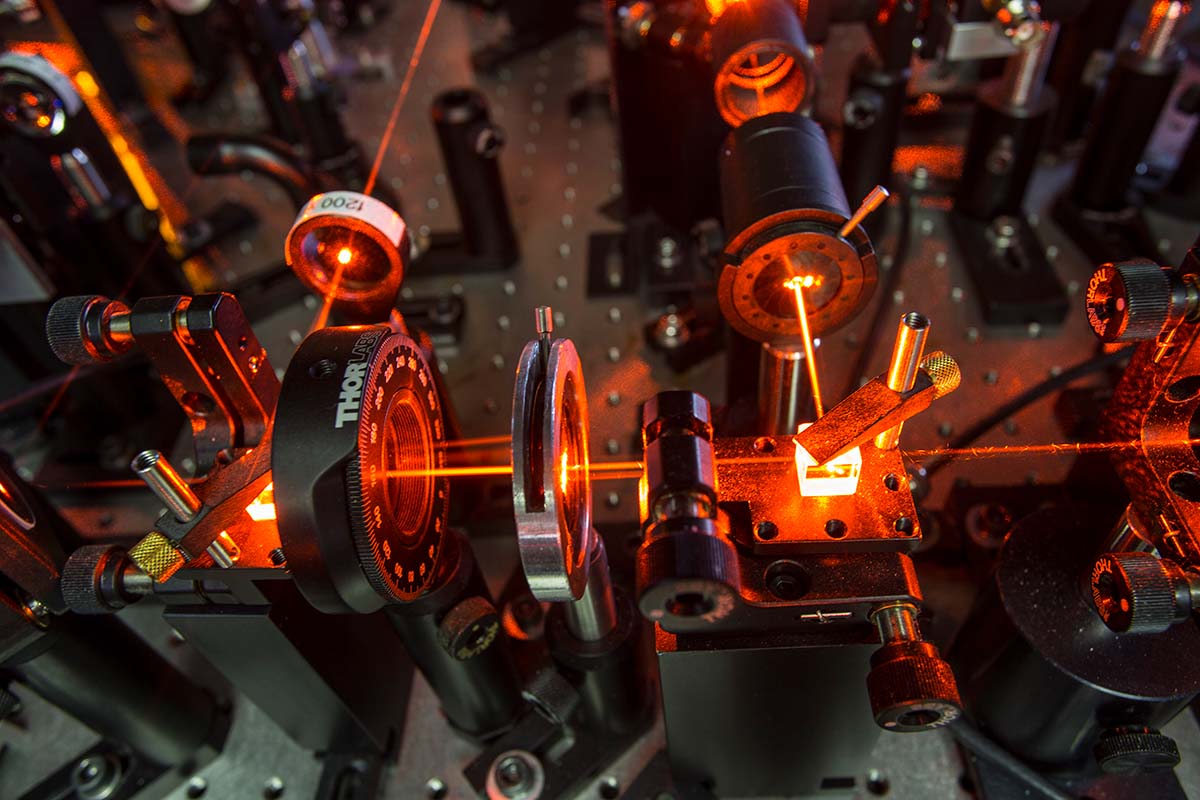
Atomic magnetic field sensors provide state of the art detection and have recently broken the theoretical performance limit of Superconducting Quantum Interference Device (SQUID) sensors. (These are used to detect incredibly tiny magnetic fields and have applications in brain imaging, heart diagnostics and geology.) Arrays of individual atoms in optical tweezers provide a promising platform for two and three-dimensional magnetic field mapping. The goal of this project is to develop new magnetic field sensors with enhanced performance based on orderly displays of individual dysprosium atoms in optical tweezers.
Dysprosium is, alongside terbium, the most magnetic atom that exists. It has a magnetic moment (magnetic strength and direction) that is an order of magnitude larger than those of alkali atoms that are commonly used in atomic magnetic field sensors. Alkali atoms are used most often because they are well understood and there are many ways to manipulate them.
Now it’s thought that the different properties of other elements may provide improvements over alkali atoms. The project has three specific scientific aims: to explore tools for dysprosium manipulation; to devise efficient protocols for generating superposition states of the two extreme m-states of a dysprosium atom; and to deliver a proof of principle demonstration of a magnetic field measurement, using a single dysprosium atom. By achieving these aims the team will validate dysprosium’s unique potential for atomic magnetic field sensors.
This project is led by Dr Mikkel Andersen together with PhD student Liam Domett-Potts and international collaborators from the University of Parma, Italy and the Institute for Quantum Matter, part of the Center for Integrated Quantum Science and Technology (IQST) at Ulm University, Germany.
Investigators
Click on a person for additional information

Associate Professor Mikkel Andersen
Principal Investigator

Liam Domett-Potts
PhD Student

The Dodd-Walls Centre research focus is photonics, the generation, transmission, and manipulation of light, and the study of matter and energy at the quantum level.