

Quantum Weaving Workshop
Day 1 was held at Karitāne, north of Dunedin, with Kāti Huirapa ki Puketeraki raranga expert, Suzi Flack, assisted by University of Otago staff members Dr Keri Cleaver, Mariana Te Pou and Manaia Pearman Fenton. Dodd-Walls staff and post-graduate students learned about the whakapapa, history, biology and uses of harakeke as well as meanings of particular patterns. This was followed by examining various harakeke cultivars and the need for further research to determine how to combat pests that are ravaging this taonga species. The skill involved in creating different items was revealed when participants learned how to either extract muka/fibre from the plant or create wrist bands using ‘raw’ flax. A special treat was viewing of an amazing and time-consuming woven sail based on the design of ‘Te Rā’ the only known 200 year-old woven sail formerly in storage at the British Museum, London, but on loan in NZ. Kāti Huirapa ki Puketeraki weavers are recreating Te Rā and will test it on the rūnaka’s double-hulled waka.
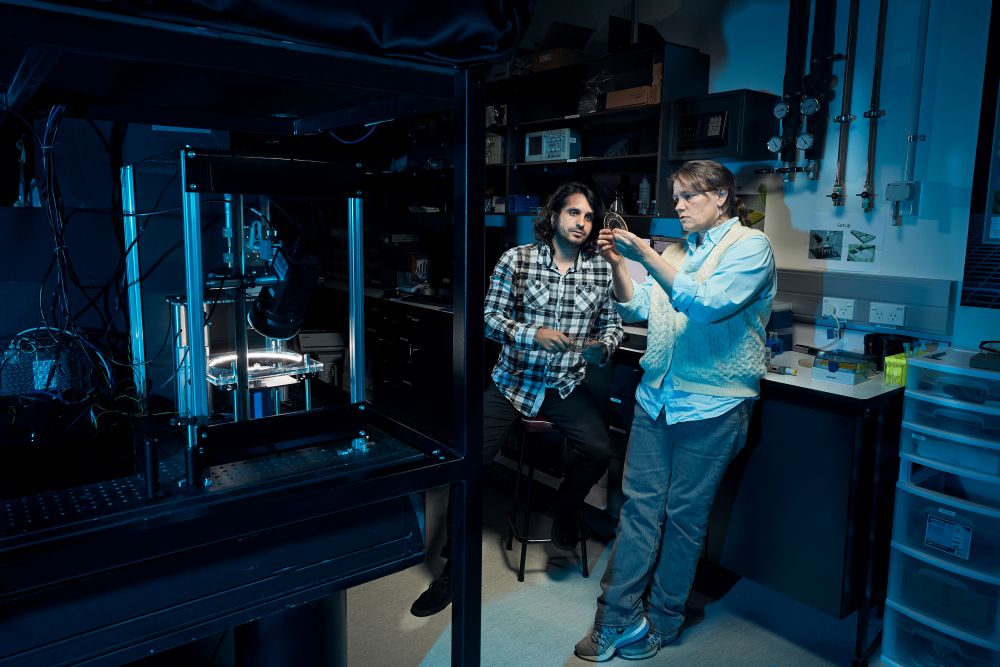
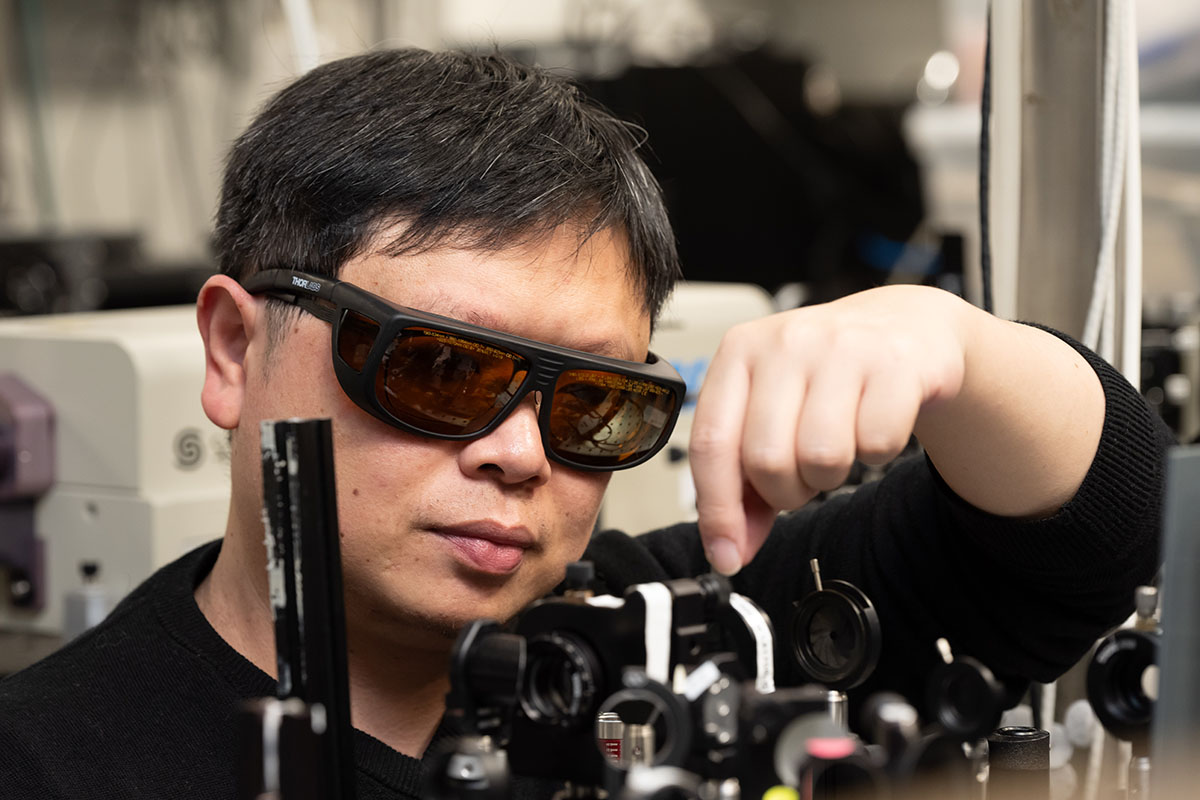
Day 2 was spent in the Physics Department. Participants learned about some of the basic details of quantum research, including a presentation by PhD student Ben Ripley on his Supersolids project, and visited the labs of Professors Mikkel Anderson and Niels Kjærgaard. There was also a Q&A session between Professor Blair Blaikie and Russell Bissett an Assistant Professor at the University of Innsbruck, Austria, about what it takes to have a career as a physicist. Russell took participants through his whole career – from High School in Waimate, his undergraduate degree where he changed directions, his post-graduate and PhD, followed by post-doc stints at Los Alamos, Trento in Italy, and then a permanent position at Innsbruck. The Quantum Weaving project itself is a collaboration amongst Blair, Russell, Kerri Cleaver and Deputy Director Māori, Associate Professor Katharina Ruckstuhl, on how concepts and practices from different domains can spark insights, passions and new capabilities.
Latest
News

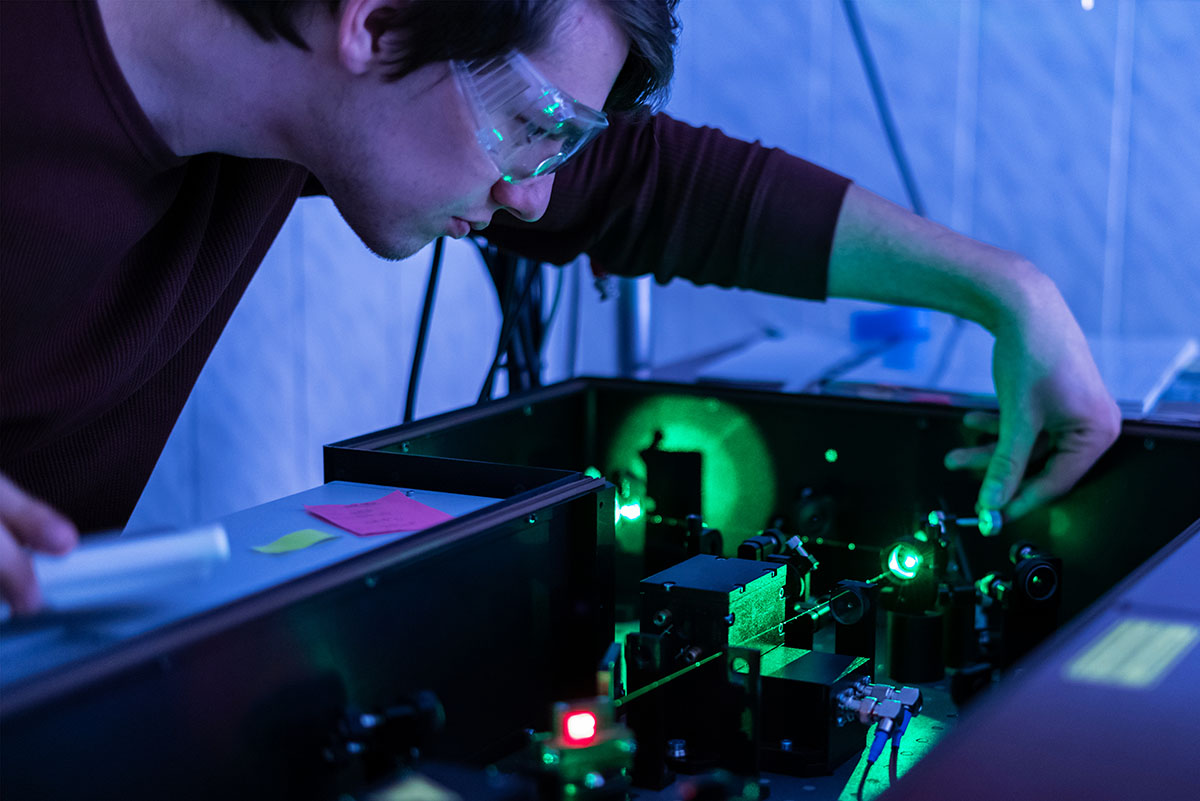

The Dodd-Walls Centre research focus is photonics, the generation, transmission, and manipulation of light, and the study of matter and energy at the quantum level.